Yellowstone National Park: a Geothermal Wonderland
Nestled in the northwest corner of Wyoming, Yellowstone National Park is a mesmerizing natural wonderland that boasts a unique geothermal landscape. Spanning over 2.2 million acres, the park is a UNESCO World Heritage Site and the first national park in the world. Its geothermal features, including geysers, hot springs, and mud pots, draw visitors from all over the globe to witness the raw power and beauty of the Earth’s inner workings.
Geysers: Nature’s Spectacular Show
Yellowstone is home to over 60% of the world’s geysers, making it the ideal destination for those seeking to witness these spectacular natural phenomena. The park’s most famous geyser, Old Faithful, erupts approximately every 90 minutes, shooting boiling water up to 185 feet into the air. Its predictability and impressive display make it a must-see for visitors of all ages.
In addition to Old Faithful, Yellowstone is dotted with numerous other geysers, each with its own unique personality and eruption patterns. From the towering plumes of Steamboat Geyser to the colorful mineral deposits surrounding Grand Prismatic Spring, the park’s geothermal features offer a captivating glimpse into the Earth’s fiery depths.
Hot Springs: Pools of Vibrant Hues
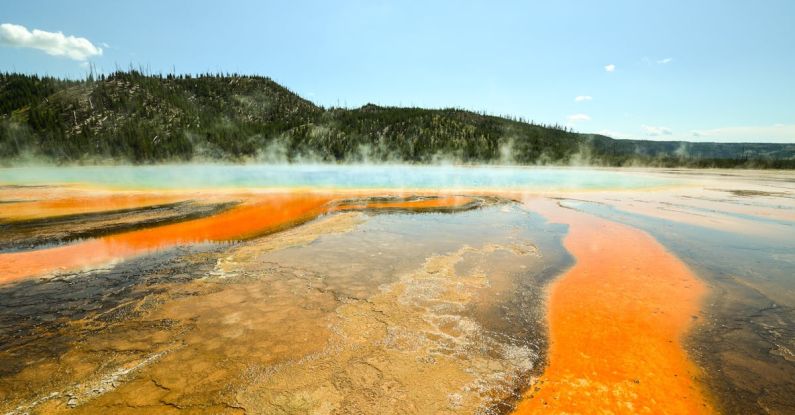
One of the most visually striking aspects of Yellowstone’s geothermal landscape is its vibrant hot springs. Fueled by underground volcanic activity, these pools are filled with mineral-rich water that creates a kaleidoscope of colors, ranging from deep blues and greens to fiery oranges and reds.
Grand Prismatic Spring, located in the Midway Geyser Basin, is the park’s largest hot spring and a true feast for the eyes. Its brilliant hues, caused by microbial mats that thrive in different temperature zones, draw visitors to its boardwalks for a closer look at nature’s artistry.
Mud Pots: Nature’s Boiling Cauldrons
For a more primal and earthy experience, Yellowstone’s mud pots offer a glimpse into the park’s bubbling, boiling underbelly. These acidic features are created when hot water mixes with volcanic gases, breaking down the surrounding rock into a clay-like substance that bubbles and pops like a simmering cauldron.
Artists Paint Pots, located in the Lower Geyser Basin, is a prime example of Yellowstone’s mud pot wonders. Visitors can witness the dynamic interaction between steam, water, and clay as the pots churn and spurt mud in a mesmerizing display of nature’s forces at work.
Wildlife: Thriving in a Geothermal Paradise
Yellowstone’s geothermal features not only provide a stunning visual spectacle but also create a unique habitat that supports a diverse array of wildlife. From bison grazing near steaming hot springs to elk foraging amid bubbling mud pots, the park’s geothermal landscape offers a rich tapestry of life that thrives in this geologically active environment.
Conclusion: A Journey into the Earth’s Depths
Yellowstone National Park is a geothermal wonderland that invites visitors to embark on a journey into the Earth’s depths. With its geysers, hot springs, mud pots, and diverse wildlife, the park offers a mesmerizing glimpse into the raw power and beauty of our planet’s geothermal forces. Whether marveling at the eruptions of Old Faithful or admiring the vibrant colors of Grand Prismatic Spring, a visit to Yellowstone is a truly unforgettable experience that will leave you in awe of nature’s infinite creativity.